 We respect your privacy





























Muškat bijeli (Muscat Blanc à Petits Grains)

It is grown to the greatest extent in the area of Buje and Momjan
Muscat is believed to have arrived in Istria sometime in the 13th century from the Italian region of Friuli. It has adapted well to local conditions, climate and soil, so over hundreds of years in the area of Momjan it has evolved into a separate biotype of the white Muscat variety. According to its morphological and genetic characteristics, it belongs to the white Muscat variety, although the biotype of this variety grown in the area of Momjan has certain specificities, such as smaller berries, less compact bunches and stronger accumulation of aromatic compounds during ripening.
Momjan Muscat is a top-quality wine that has traditionally been grown for centuries in the vicinity of Buje and Momjan.

Colours and aromas
Colour
The color of Muscat varies from beautiful pale green to dark straw yellow.
Aromas
The aromas of Muscat are typical of the white Muscat variety and are reminiscent of wild cloves, roses and sage. The taste is full, rounded, with notes of nutmeg that linger in the mouth for a long time.
Acids are moderate, from 5 to 7 g/l.
The wine has medium to strong body, often with more than 12% alcohol.
The high amount of sugar in the grapes leaves a lot of unfermented sugar in the wine, so it is bottled as dry, semi-dry or semi-sweet, in order to emphasize the full flavor and refined aroma.
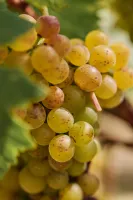
Muškat momjanski (Moscato di Momiano)
A white wine from the vineyards around Momjan in northern Istria is made exclusively from the Muscat Blanc à Petits Grains grape. In August 2021 the European Union granted it Protected Designation of Origin (PDO) status, making it the 18th Croatian wine protected at EU level. The application for protection was submitted by the "Vino Momilianum" association.
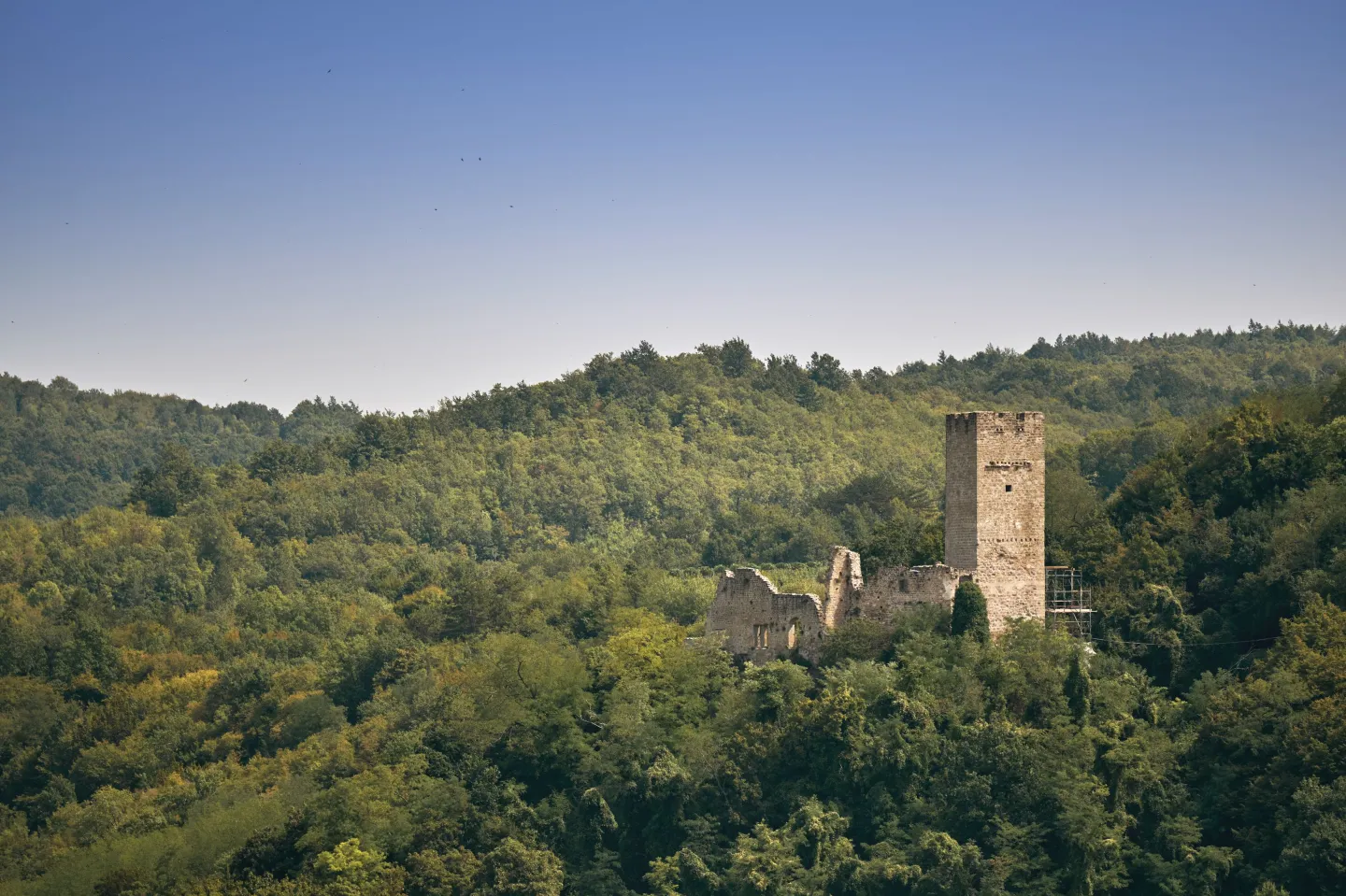
The Momjan vineyards lie 8 to 16 km from the sea, mostly above 160 m, where the Mediterranean climate meets the continental one. Warm days allow the grapes to ripen fully, while cool nights preserve their acidity and varietal aromas. For generations, winegrowers have selected their best vines for propagation. This produced a distinctive local type of Muscat Blanc à Petits Grains (muškat bijeli), with smaller berries, greater resistance to grey mould, and higher sugar and aroma levels. The grapes are harvested exclusively by hand, and the wine is made and bottled in family cellars within the protected area.
Did you know?
Muscat was the favorite wine at the court of Francis Joseph in Vienna and King Emanuel II in Rome.
As early as 1935, Momjan Muscat won a gold medal at the Wine Fair in Brussels.